Rethinking IT equipment: a concrete lever for responsible companies
Digital technology now accounts for a growing share of companies' environmental footprint. Yet a large part of this footprint is generated upstream, when the equipment is manufactured. In light of this, using refurbished equipment is emerging as a pragmatic and sustainable response. It not only extends the lifespan of devices but also reduces electronic waste and keeps costs under control.
Adopting refurbished equipment means taking concrete action on two essential aspects of digital responsibility: reducing the carbon footprint and controlling the budget, while contributing to the development of a local and inclusive industry.
A French industry taking shape: relocation and jobs at stake
This industry involves social and solidarity economy (SSE) organizations, such as integration workshops and adapted companies. It promotes local employment, especially for people retraining or far from the job market. These organizations combine technical know-how with a social mission.
Quality, security and guarantees: refurbished equipment gains credibility
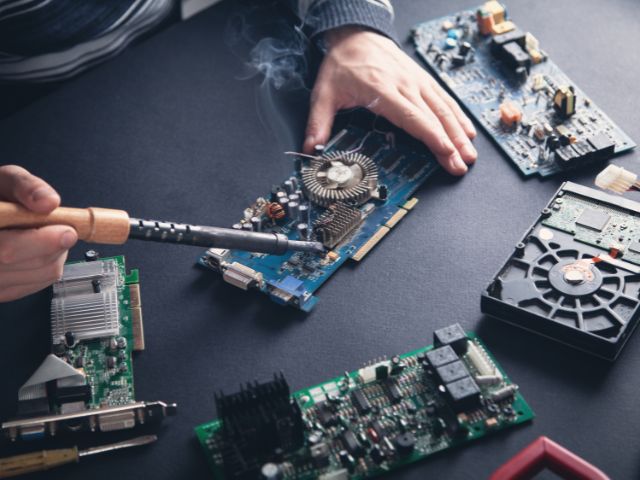
One of the traditional barriers to buying refurbished equipment is reliability. Yet quality standards have become highly professional. Thanks to rigorous testing procedures, component replacement and secure data erasure (in compliance with the GDPR), companies can equip themselves with complete confidence.
Refurbished products now come with warranties of up to 24 months, with professional after-sales service. Some platforms, such as our partner Seensys, offer solutions designed specifically for businesses, including technical support and tailored logistics.
Controlling your IT budget without sacrificing your CSR ambitions
In a context of cost optimization, refurbished equipment is a strategic solution. Companies can reduce their IT equipment budget by up to 50%, while embracing a circular economy approach.
Integrating refurbished equipment also helps meet the requirements of the CSRD directive on the transparency of non-financial impacts. By choosing low-carbon devices, companies align their purchasing practices with their CSR policy, while ensuring the continuity and performance of their IT fleet.
A forward-looking solution for more sober digital practices
The B2B refurbished market is booming, estimated at 600 million euros by 2025. This growth is accompanied by major innovations: robotized sorting centers, optimized reverse logistics, digital traceability of equipment, digital passports and more.
These developments make it possible to meet companies' specific needs in terms of compliance, security and traceability, while significantly reducing their environmental impact. The projections are clear: within 10 years, refurbished equipment could become the norm in many professional sectors.
In summary, choosing refurbished equipment is no longer a marginal choice. It is now a powerful lever for more sober, more local and more inclusive digital practices. For companies, it is also a way to reconcile economic performance and environmental responsibility, two requirements that are increasingly inseparable.